Featured

Drones – Is it the answer to the Evergreen Revolution

The Green Revolution refers to the high yield of food grains such as Rice & Wheat, to transform the malnourished growing population. It all started in the 1950s and 60s when a set of technological transforming initiatives were carried worldwide, especially in the developing world. The new technology included high yield varieties of cereals, the use of pesticides and better management techniques. Policies of institutional support were introduced to cater to the Green Revolution such as subsidies for fertilizers and groundwater extraction, also Minimum Support Prices (MSP) for food grains and procurement for the processing plants (such as Rice Mills). From a malnourished nation, these steps made India an exporter of food grains. Today India is the world’s second-largest producer of wheat and rice after China. 

However, The green revolution has its own set of demerits and in fact, the demerits may be overtaking the merits lately. 

  1. Since its launch, the green revolution has failed to provide more nutritious food such as Millets because of its focus on a high yielding crop such as Rice. 
  2. The subsidies in fertilizer have turned the highly fertile land into barren land.
  3. Excess extraction of water has depleted the groundwater level. 
  4. Water-logging in fields and salinity increased due to excess irrigation.

 Thus, to rectify the loopholes of the Green Revolution there was a dire need for new policies and innovations and hence the term “Evergreen Revolution” was coined by the father of Green Revolution, M.S. Swaminathan. The logic is to produce more from less, less land, less pesticide, less water and it must be an evergreen Revolution to get sustainable agriculture.

Evergreen Revolution which implies productivity improvement in perpetuity without ecological and social harm

Role of Drones in Agriculture

THE FOLLOWING IS A RESEARCH BY UNIVERSITY OF DELAWARE, USA.

Rotary Drones

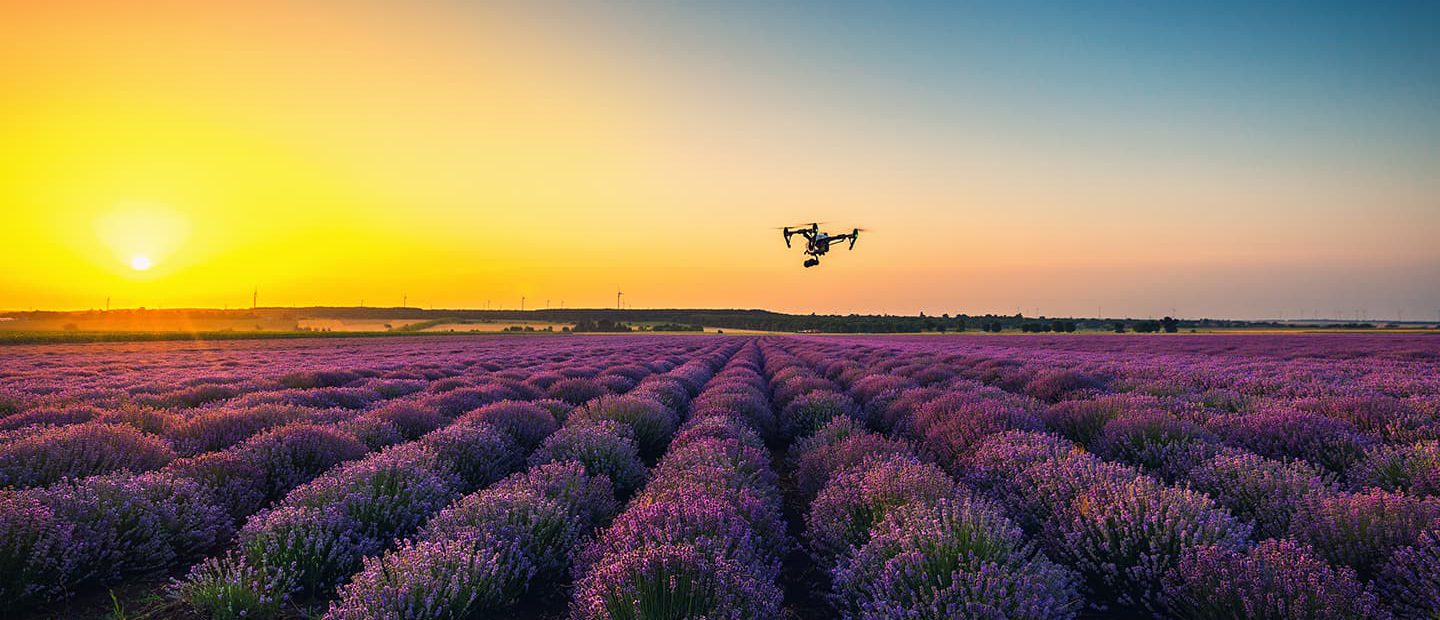
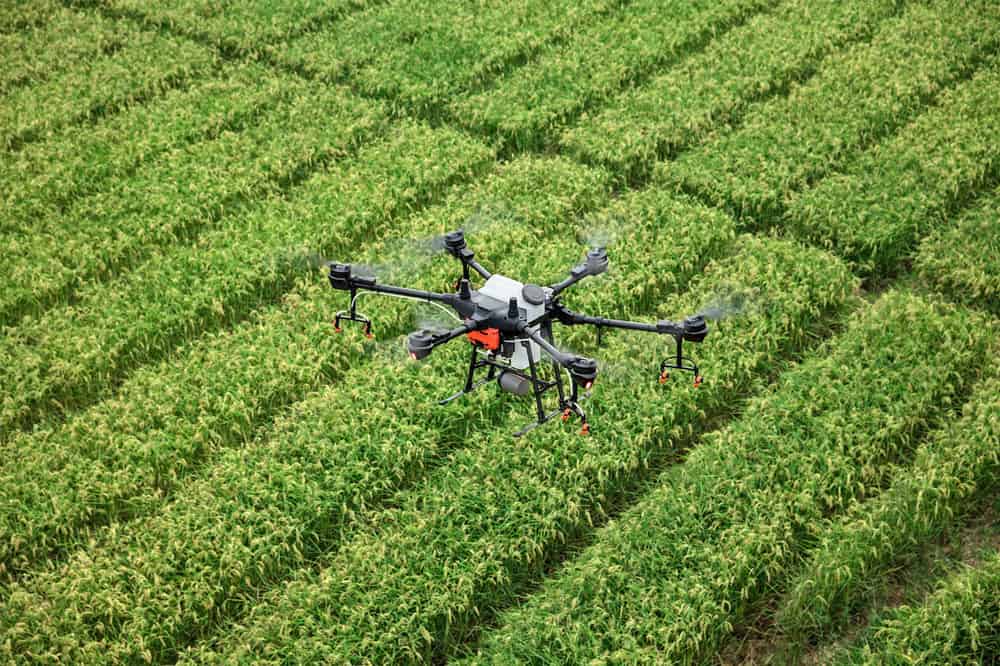
A rotary drone is often identified by the number of rotors (propellers). An example would be the quadcopter, which has four rotors.

A rotary drone is an excellent scouting tool for field crop operations. A quadcopter can takeoff land vertically, so field lanes and parking spots become launching zones. Rotary drones are easy to maneuver across the field and can hover over problem areas.

Battery life is an issue with rotary drones since power is drained more quickly due to the powering of multiple propellers. Flight times for many quadcopters range from 10-20 minutes and can be less when flown during high wind speeds. As such, rotary drones are useful for smaller fields and scouting operations.
Fixed Wing Drones

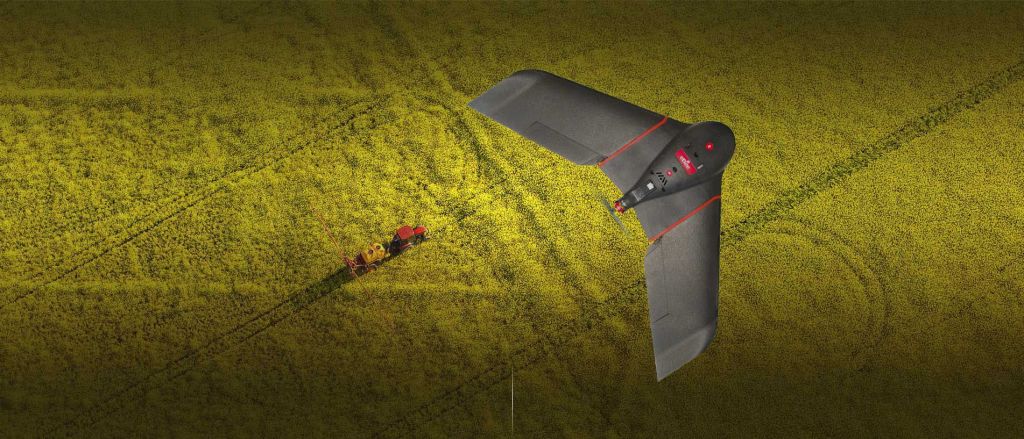
Fixed-wing drones work just like airplanes, using lift and drag to stay aloft; most fixed-wing drones have only one propeller. As a result, fixed-wing drones have longer battery lives, with the potential to stay in the air for 20 minutes or longer.

Fixed wings also can reach greater speeds than a rotary drone, and when combined with longer battery life, it allows fixed-wing drones to cover greater acreage.

However, fixed wings will require space to land, similar to an airport runway. They may be designed to land by skidding across the ground.

The hybrid version of a fixed-wing overcomes this issue by taking off and landing like a copter but flying like a fixed-wing.
Fixed Wings Drone

Camera and Sensor Types

Many popular consumer drones come with their own cameras, which are good for photography or scouting. Drones advertised for measuring field crop health may be fitted with specialized cameras, often at a much higher cost than consumer drones. For agriculture, the necessary camera will be dependent on the end-user.
Visual Cameras

Cheaper consumer drones may come with a visual camera, sometimes called RGB (red-green-blue) camera. Like the human eye, these cameras will capture the visual spectrum, and therefore, work well for field scouting.

Multispectral Cameras

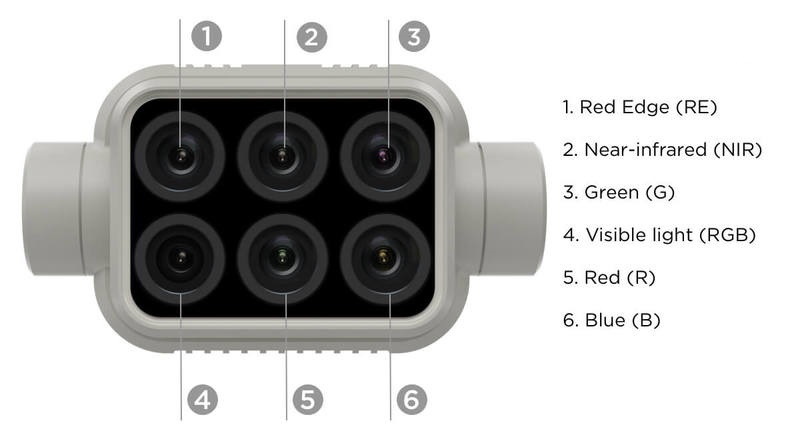
Plants reflect a larger range of wavelengths than our eyes can detect, including light in the near infrared region (NIR). One option to capture both visual and NIR bands is to make two flights with different cameras. Another option is to use a camera with multiple lenses.

Multispectral cameras have more than one lens, each with a different filter. These filters allow the lens to focus on selected wavelengths, including the NIR and visual spectrum. Images from multispectral cameras can be used to calculate vegetation indexes, which are correlated to biomass or plant health.

Thermal Cameras

Longer infrared wavelengths can be used to measure thermal radiation or temperature. Plants that are either dead or under stress should be warmer from less evaporation, which can be detected by thermal cameras.

LiDAR

Light detection and ranging (LiDAR) uses lasers to detect the distance of objects. These sensors are very accurate at mapping landscape elevations. They are also fairly expensive to deploy on drones. Elevation can also be measured with drones using overlapping images (also called photogrammetry), which could be done with a regular camera at lower cost, but with reduced accuracy when compared to LiDAR.

Other Potential Drone Accessories

Some drones may need additional parts, including remote controls, tablets, and software to properly fly the drone. It is wise to check the accompanying accessories before a purchase is made.

Cameras may also need additional parts, including a global positioning system (GPS) to tag photos and a light sensor to correct for varying weather conditions. These are only necessary for higher end users.

Vegetation Indexes

Within the agricultural drone market, there are many claims that drones can be used to measure crop health. In many cases, these companies are using multispectral data that observe how plants reflect different wavelengths of light. Many vegetation indexes that compare reflection were originally based off satellite photography and are well established. One of the most well known is the normalized difference vegetation index (NDVI). This index uses the NIR and red bands to determine plant biomass (Figure 4). However, the biomass being characterized by these methods may include weeds. If disease or insect damage is enough to reduce biomass, NDVI cannot necessarily inform a scout as to its actual presence, just that there is an issue. If potential issues are spotted using drone technology, we recommend that the field still be walked to determine the underlying cause of the issue. A trained agronomist can identify field issues from visual photos without the need for multispectral cameras.

Drones and Agriculture – A Match made in heaven

coming back to our discussion (after a long technical discussion about drones), combining all the features of a drone such as quick transportability, fast access to data through sensors its seems as if the drone handler himself is analyzing the field in real time.

Moreover, it removes much of the human error aspect of traditional inventory work by using data analytics and IoT. Though many will argue that ground-based inspections combined with satellite imagery, along with a dedicated grid soil sampling program is more practical to determine the NPK (Nitrogen, Phosphorus & Potassium) content of the farm, a Variable Rate Application Map of a field may show the amount of the nutrients to be applied in different parts of the field. 

e.g. A farmer can apply 300 kg/ha of fertilizer to struggling areas, 200 kg/ha to medium quality areas, and 150 kg/ha to healthy areas,decreasing fertilizer costs and increasing yield. Also, it’s the drone that can assist in spraying the fertilizer with an efficiency of five times that of manual spraying.

In this modern age, scaling up productivity exponentially does not mean having more of the things you make but changing the way you make it. With the introduction of drones in the agricultural sphere is a great step to revolutionize the industry.

STATE OF AGRICULTURE

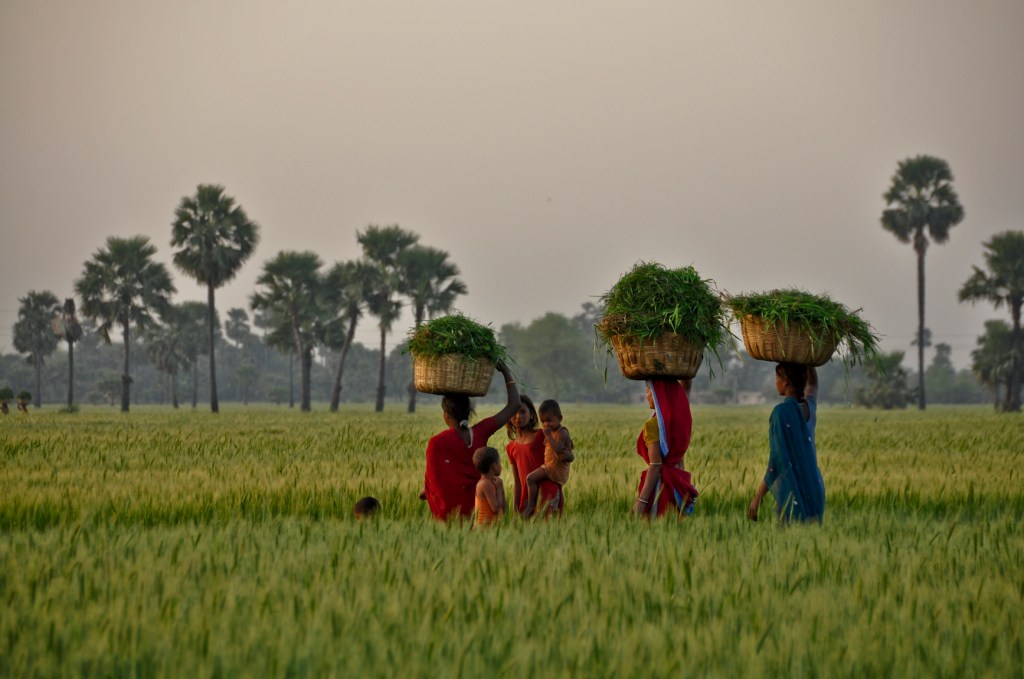
I was born and brought up in Sambalpur, a district in the state of Odisha, famous for its Hirakud Dam, Largest dam in Asia, famous for its globally renowned Textile bounded patterns and fabrics, popularly known as Sambalpuri Textile. Apart from textile Sambalpur has rich Tribal Heritage and Forestlands. The important crop grown in the district is Rice, Gram, Groundnut, Mustard, Castor and others. Though the first two mentions are the chief highlights of the district, Sambalpur forms the rice bowl of odisha along with the adjacent district , Bargarh . Everything was fine until the eve of 3rd of October ,2019 when a news broke that Bargarh had turned out to become the most cancer populated district in the whole of odisha. In a study conducted in 23 of 30 districts in Odisha, 26.3% cases of cancer were reported from Bargarh. I had to know what was the reason for it. The Link lies in Paddy farming. Being a business man in the industry of processing paddy to rice, I was taken aback by this news. Bargarh gets abundant water from Hirakud Dam in Sambalpur. All the farmers here grow Paddy, which requires a lot of water. Bargarh gets so much water that farmers sow paddy twice a year, instead of the usual one. Well rather than being a boon, excessive water turned out to be a curse for the locals. Some 15 years ago, Farmers from the neighbouring and water-starved state of Andra Pradesh shifted to Bargarh. They habitually sprayed pesticides to boost the growth. Seeing the flourishing paddy growth, the native’s imitated the practice. The pesticides used by the farmers here has been placed in the class II Hazardous category by the Wold Health Organisation. This category  “have severe negative effects on human health and environment” writes BR Mahananda, professor, Environment Science, Sambalpur University, in his 2016 research paper Impact of Pesticides on Farmers Health of Western Odisha.  Mahananda found that 11% of farmers did not know that pesticides are harmful, 35% did not follow the instruction provided on pesticide container & 18% did not know the container had instruction on how to use pesticide printed on it.

I couldn’t stand the fact and wanted to explore some basic knowledge of the farmers around me, as there were many. Mona Dash, a local farmer engaged almost 40 years of his life in cultivation of paddy in his limited 7500 Sq. feet of land, producing up-to 20 Quintals of paddy throughout the year comprising of two seasons, Rabi & Kharif, still plucks a grown paddy straw and goes to the local fertilizer shop to ask for the required fertilizer. This is a similar situation like most people in India go to a chemist for a cold and ask for medication without seeing a doctor. On asking Mona, why wouldn’t he see a biochemist for determining which fertilizer is appropriate for his cultivation, he surprisingly replied about being unaware of any such facility. Throughout his life he thought, fertilizer shops were the only way to determine the required fertilizer. I was shocked to find that Mona dash was not the only one unaware about the scheme. The whole of my locality is crowded with farmers similar to him and almost everyone was unaware of it or was considering it to be too cumbersome (which in fact it was not and also was free of cost).

Being inquisitive about the progress of the scheme I went to the local Agricultural office which had a soil testing lab in it. I was educated that almost 25 stationery Soil Testing labs were set up in odisha with one being in the office I visited to. Although it had a capacity of testing nearly 12000 test per year it hardly got 500 test every year. The government has also put out Mobile Soil Testing lab on the street so that the farmers won’t have to visit soil testing labs which was a hindrance in getting maximum number of soil samples. “By using a soil test report, the farmer does not need to guess on the quality of soil. These tests diagnose whether there is too little or too much of a nutrient and also promote environmental quality. These also help in saving money that might otherwise be spent on unneeded fertilizer” says Agriculture, Fisheries & Animal Resource Development Minister Pradeep Maharathy. Still however there is no sign of growth in soil test data. In spite of all the attempts to get maximum soil samples the end results sets out to be not so promising. The Vans set up to test soil sample by visiting the farmers land were nothing but an abandoned van filled with dust and birds poop on top. Through my research I came across a scheme launched by the government in 2015 to provide Soil Health Cards to all farmers which will be a report card of their respective lands. The aim of the government was to set out a sense of awareness among the farmers if they would see by themselves the state of their beloved piece of land. The icing on the cake of the scheme was that the soil health card scheme could be availed by any private person just by setting up a budget soil testing lab as per the guideline and getting farmers soil tested in return of handsome amount of money from the government for each test. Though this is not were the trouble ends. On inquiring about the implementation of the scheme I was shocked to learn that even the officials were not aware of such a scheme which could benefit both the farmers as well as unemployed locals. This was just a example of the many schemes being wasted and passing by unheard of in an agriculture driven state such as Odisha.

Matter Of Concern:

With the rising levels of toxic in our food and the intoxicated water running down to our rivers where it further pollutes the river and the aqua-life it is high time we get required awareness . The environmental damage caused by the inappropriate use of fertilizer is certainly a matter of concern in many states let alone Odisha. While the government seems aware of the issue, with no less than the Prime Minister raising concern on this regard inside Parliament as well as outside, his government needs to do more than releasing money into accounts of farmers in the name of subsidy. But the bigger challenge is to change the pattern of fertilizers used.

At the age of Drones determining quality of each piece of produce, Artificial Intelligence determining diseases in plants, and the Internet Of Things optimally utilizing soil health, Where countries like Israel have converted there barren deserted land into thriving agricultural fields and transformed themselves into a Modal  Agricultural Economy, India’s agriculture sector (which constitutes 14% of GDP, 44% of employment and is the back bone of Rural economy ) contribute only 16% of Gross Value Added (GVA). India is lagging way behind with its huge promises on developing the agricultural sector and doubling farmers income by 2022. Providing subsidy in crop and fertilizer is not only worrying for the fiscal health of the economy but also detrimental to the soil health of the country.

Way Ahead:

 Finance Minister Nirmala Sitharaman on the 01st of February,2020 unveiled a 16-point action plan to uplift the agricultural sector. While presenting the budget a total of Rs.1.6 Trillion has been set aside for agricultural sector for FY21, in addition to Rs.1.23 Trillion has been allocated for rural development , bringing the corpus to Rs2.83 Trillion. The Minister announced expansion of Pradhan Mantri Kisan Urja Suraksha Utthan Mahabhiyan (PM KUSUM) Scheme, which was initially launched in the year 2018, under which 20 Lakh farmers would be provided funds to set up standalone solar pump. “Farmers who have barren land will be helped to set up solar power generations units and also sell surplus power to grid and also make living out of even barren land” she said in her speech. The plan will also help India meet its pledge to the United Nations Framework Convention on Paris Agreement signed by 195 countries, including India, in 2015.

However, the guidelines of the scheme do not mention how the production of solar power will be calculated without meter as agriculture sector largely relies on un-metered connection.Net metering is yet a big challenge in urban areas. Hardly any on-grid beneficiary has received any payments from distributing companies (discom) for generating excess power and supplying it to the grid , according to a survey by New-Delhi base non-profit Centre for Science and Environment as on July 2019 , which is almost a year later than the launch of the scheme . Also the declining rate of Solar Power Tariff from Rs.10.95-12.76 in 2010-11 to Rs.2.44 in 2017-18 is all together another topic of discussion.

Better late than never , with the rising Marketing and Logistics initiative taken in the 16-point agenda by the government, (“Kisan Rail “ or Farmer Rail and “Krishi Udaan” or Farmer Flight catering the logistics of the industry and One Product One District initiative catering the marketing initiative ), this budget provides a holistic development of the agriculture sector. The establishment of a separate cell for Agriculture Start-ups by NITI Aayog will also encourage people to come forward and contribute their expertise in agriculture. Apart from this integrated investments that affect both on- and off-farm livelihood choices and outcomes will produce better welfare than a narrow focus on production technologies in small farmers dominated system. Benefits to reach the smallest farmer will require more focus on what’s happening off the farm.

Design a site like this with WordPress.com
Get started